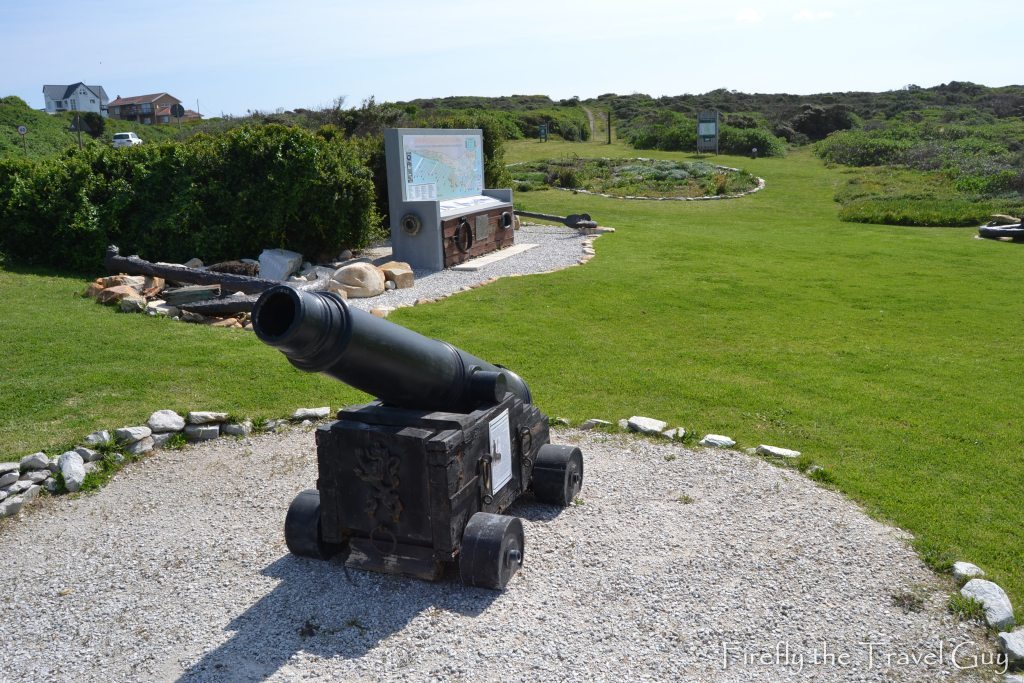
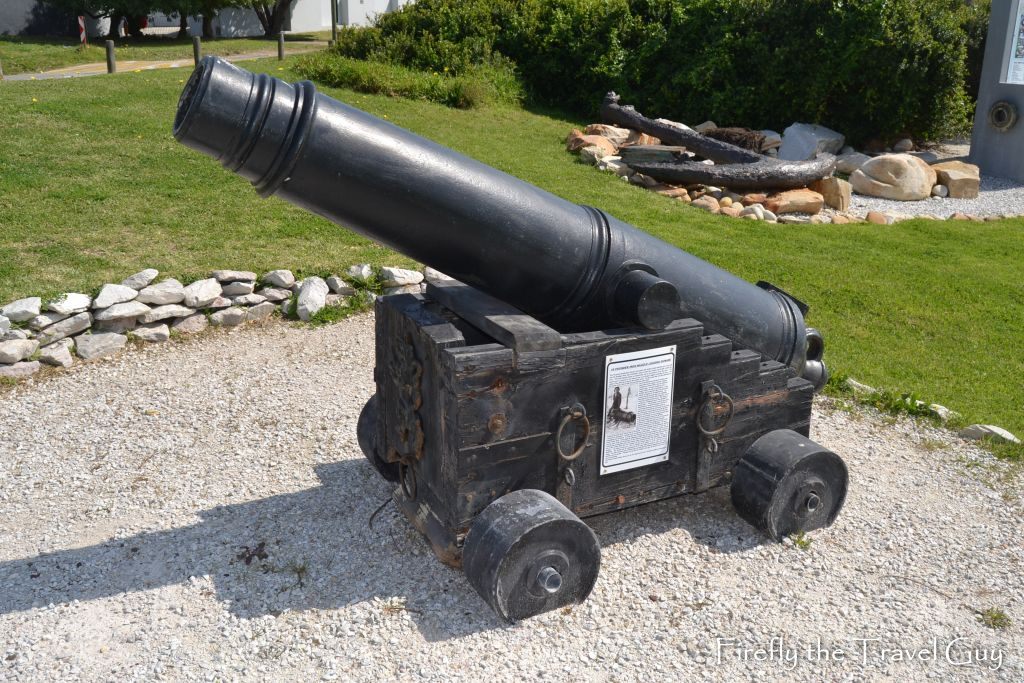
This little cannon stands in the Shipwreck Garden in Cape St Francis, but has a close affiliation to the Sundays River Valley.
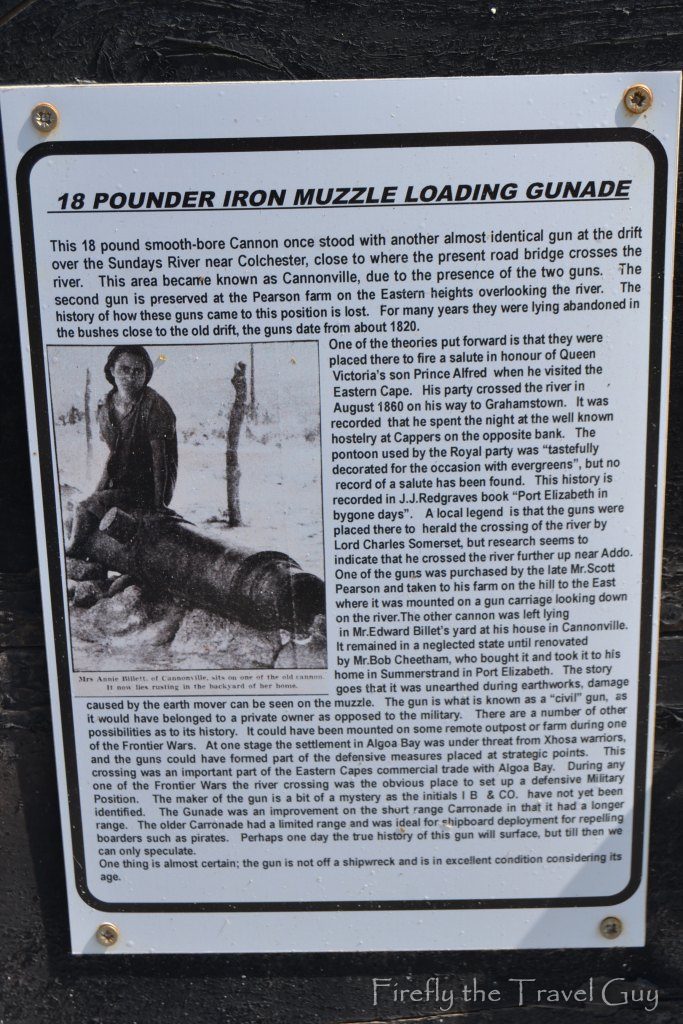
This 18-pound smooth-bore cannon once stood, with another almost identical gun, at the drift over the Sundays River near Colchester, close to where the present road bridge crosses the river. This area became known as Cannonville, due to the presence of the two guns. The second gun is preserved at the Pearson farm on the Eastern heights overlooking the river.
The history of how these guns came to this position is lost. For many years, they were lying abandoned in the bushes close to the old drift. The guns, which date from about 1820, are what is known as a “civil” gun, as it would have belonged to a private owner as opposed to the military. One of the theories put forward is that they were placed there to fire a salute in honour of Queen Victoria’s son, Prince Alfred, when he visited the Eastern Cape. His party crossed the river in August 1860 on its way to Grahamstown. It was recorded that he spent the night at the well-known hostelry at Cappers on the opposite bank. The pontoon used by the Royal party was “tastefully decorated for the occasion with evergreens”, but no record of a salute has been found.
One of the guns was purchased by the late Scott Pearson and taken to his farm on the hill to the east, where it was mounted on a gun carriage looking down on the river. The other cannon was left lying in Edward Billet’s yard at his house in Cannonville. It remained in a neglected state until renovated by Bob Cheetham, who bought it and took it to his home in Summerstrand in Port Elizabeth.
There are a number of other possibilities as to its early history. It could have been mounted on some remote outpost or farm during one of the Frontier Wars. At one stage, the settlement in Algoa Bay was under threat from Xhosa warriors, and the guns could have formed part of the defensive measures placed at strategic points. This crossing was an important part of the Eastern Cape’s commercial trade with Algoa Bay. During any one of the Frontier Wars, the river crossing was the obvious place to set up a defensive Military Position.
Perhaps one day the true history of this gun will surface, but till then we can only speculate. One thing is almost certain: the gun is not from a shipwreck and is in excellent condition considering its age.