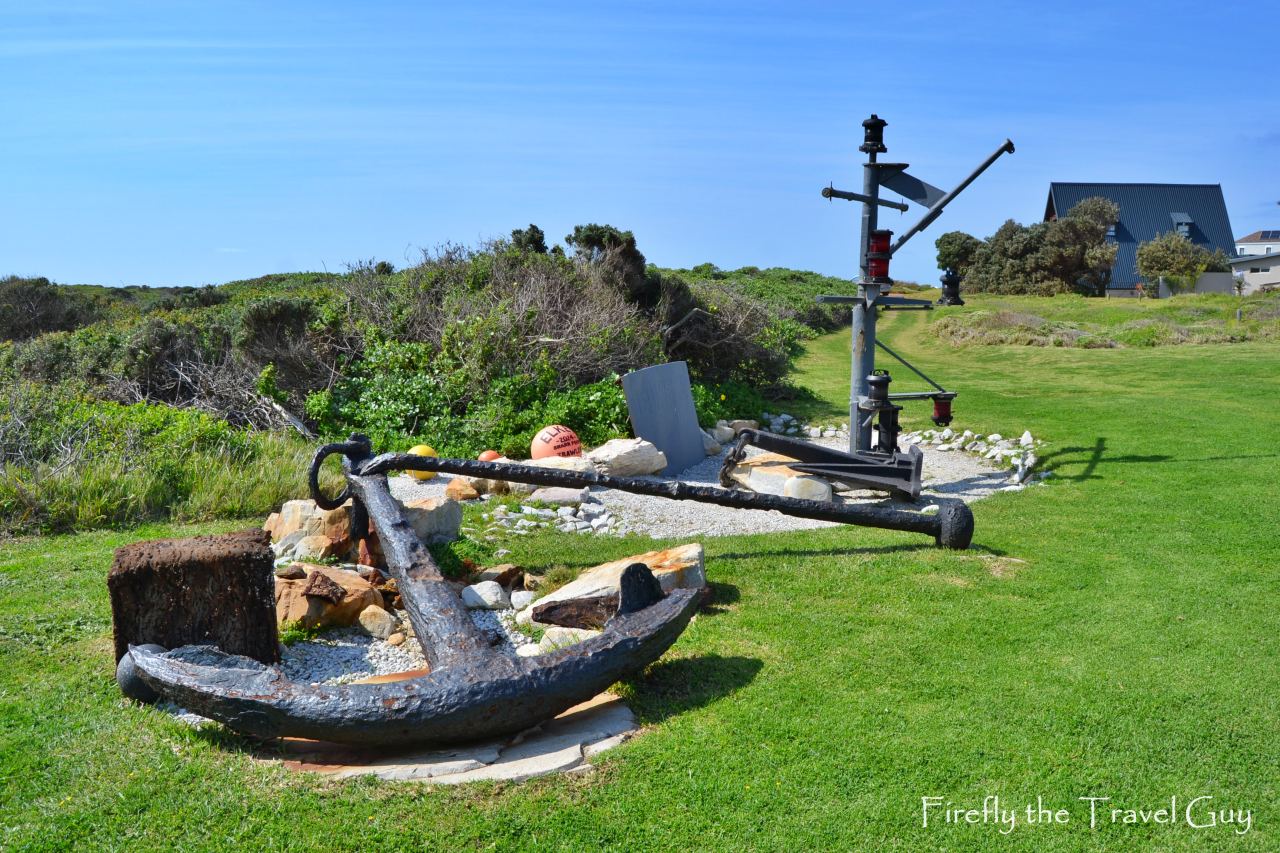
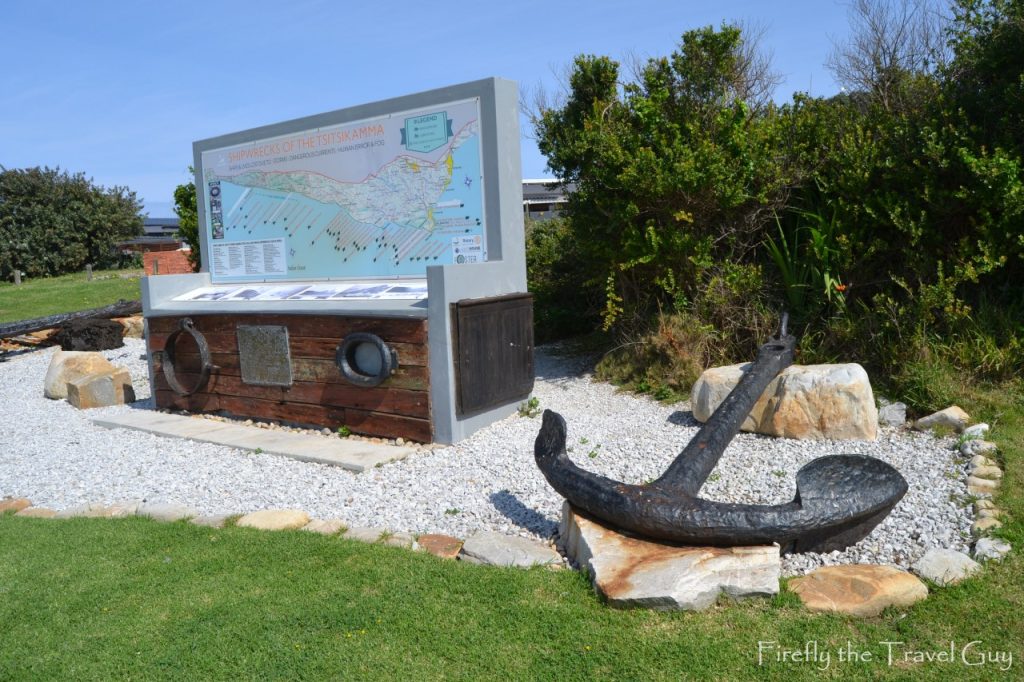
I’ve been itching to get out to Cape St Francis to have a look at the new Cape St Francis Anchor Garden and Shipwreck Display at the entrance to the Irma Booysen Flora Reserve next to the R330 as you enter the village. It’s all a case of time and money. Petrol isn’t cheap, and the Firefly Polo does not run on love and stress. A little birthday outing a couple of weeks ago was the perfect excuse for a road trip to St Francis, and this was top of my to-do list.
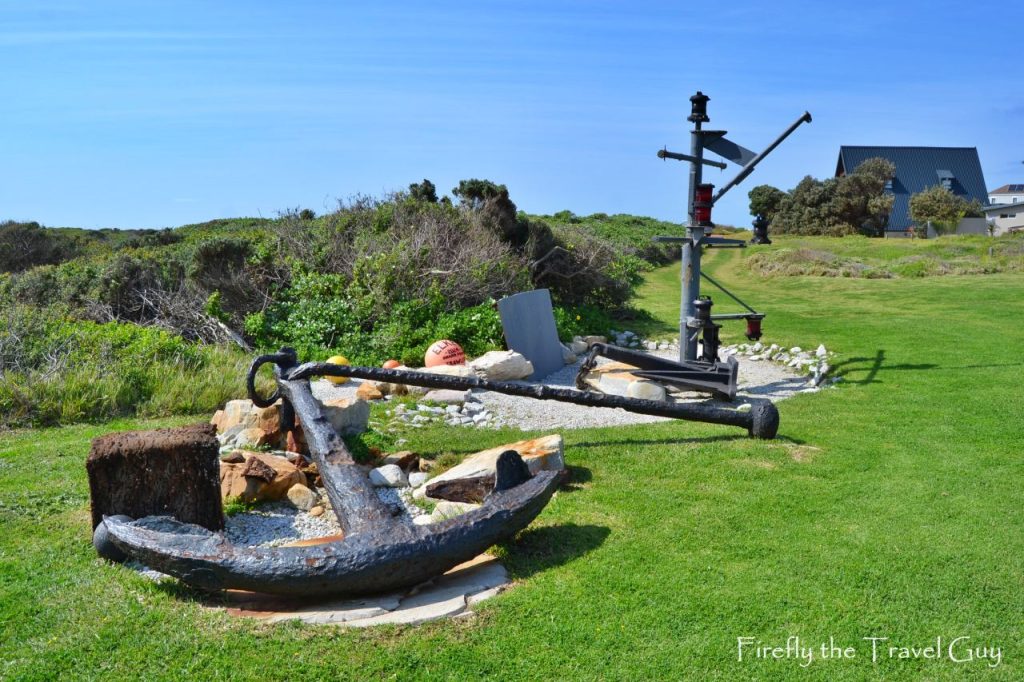
The Irma Booysen Flora Reserve comprises the broad area between the main road leading into Cape St Francis (R330) and the village itself. It can be accessed from a couple of spots in the village and comprises of a mix of fynbos and thicket vegetation.
The coast around Cape St Francis, the most southeastern point of Africa, is known for strong winds. In summer, the east winds blow, creating a wild sea and causing the Agulhas current to run very fast towards the south-west. The south-westerly winter winds push against this current and this creates dangerous, large waves. The Agulhas current runs very close to Seal Point, where the lighthouse is situated. Here it meets with the shallow continental shelf and creates a strong counter current which can easily carry a ship towards the shore and into trouble.
The earliest described shipwreck on this part of the coastline was that of the Noord that ran onto the rocks on 16 January 1690, “14 mylen” west of St Francis Bay. This was just the start of it and over the years, many a ship has run aground on this coastline. One of them is the well-known HMS Osprey, a Royal Navy warship that was returning from China and was wrecked about four kilometers west of Seal Point. If you take a walk on the Wild Side, you will find remains of her boiler on the beach about 3 km west of the lighthouse.
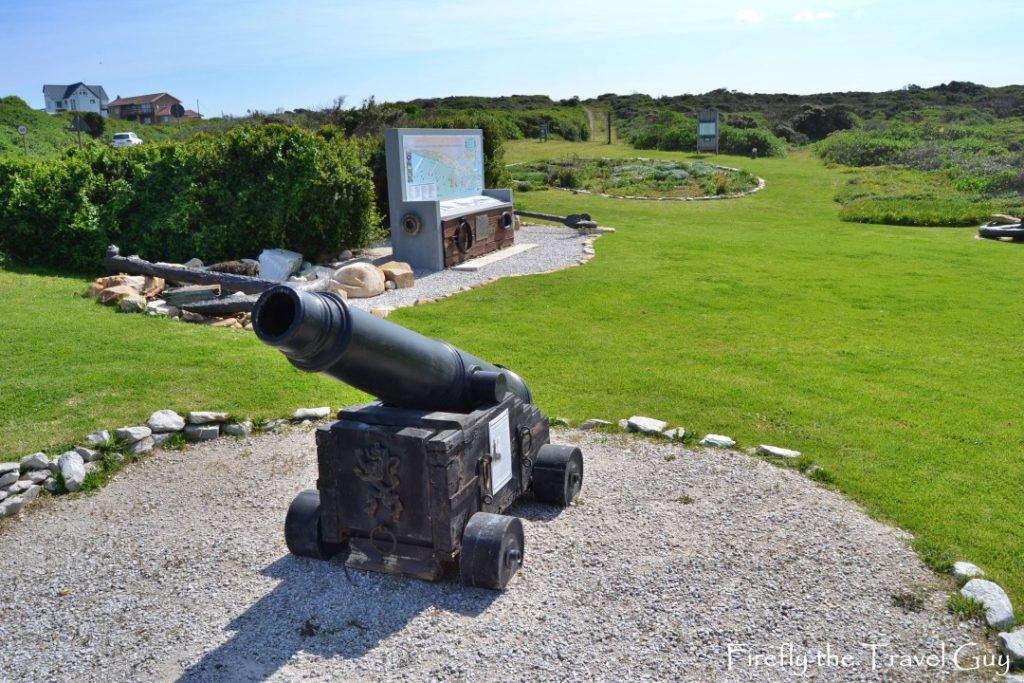
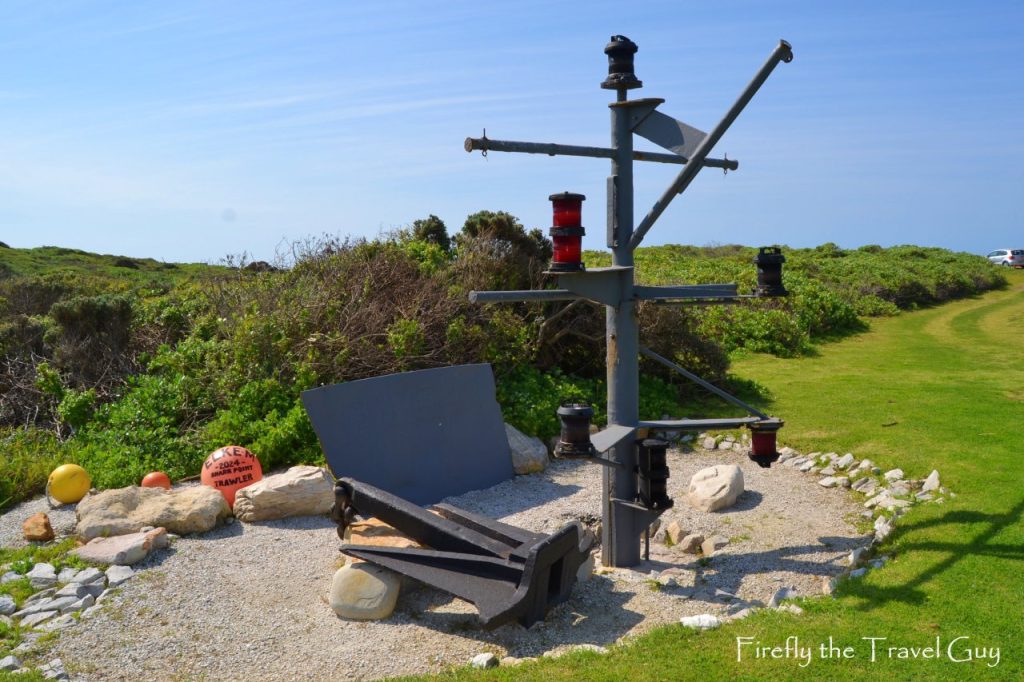
Most of the anchors and other items on display come from wrecks in the area. Two of the anchors were salvaged from the barque Eliza and Alice wrecked in 1870 at Mostertshoek, west of the site of the HMS Osprey. The little cannon, interestingly enough, came from Cannonville next to the Sundays River, east of Port Elizabeth.
A map at the display shows where most of the shipwrecks in the area took place, but you can also read more about it on The St Francis Kromme Enviro-Trust website here and here.