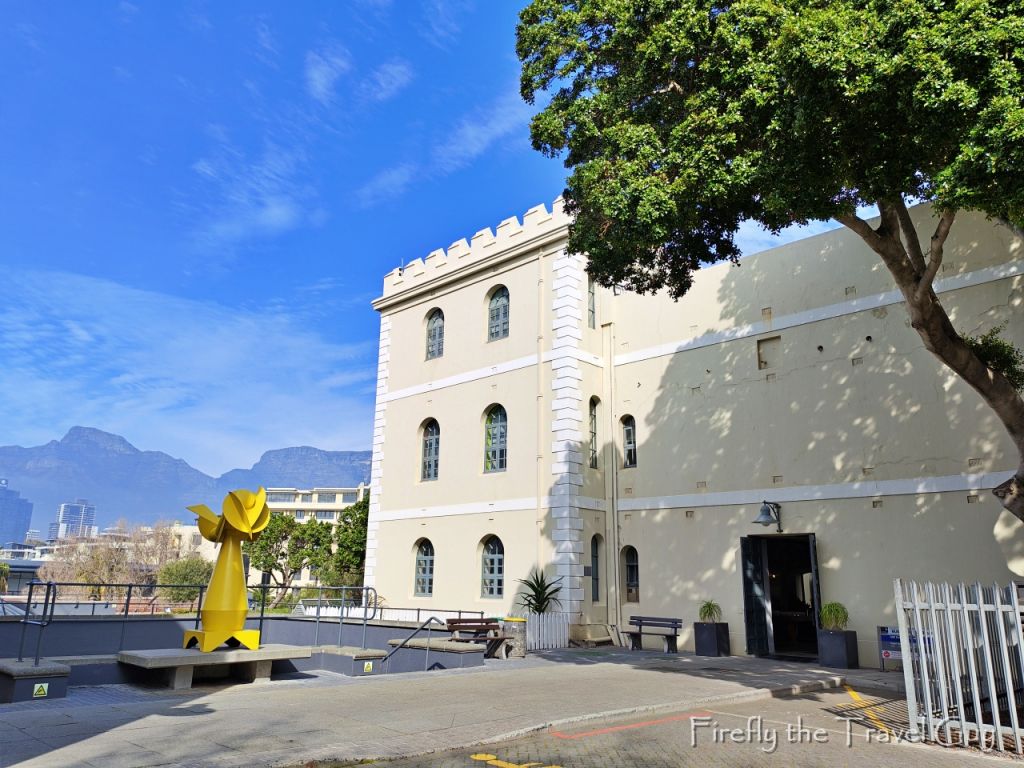
The Breakwater Prison (or Breakwater Goal) within the V&A Waterfront precinct, was one of the prominent features along the early Cape Town coastline. In the 1840s, a need arose for a breakwater to be built, and it was suggested to make use of convict labour to do so.
Construction of the first Breakwater Lodge (by convict labour) was completed in 1859 and work on the harbour breakwater itself started in 1860. During the later part of the 19th century other prisoners were accommodated at the Breakwater prison.
In 1902 white prisoners were moved into a new building, called the Industrial Breakwater Prison, which remains today. Since 1991 the Breakwater Lodge has served as the Graduate School of Business of the University of Cape Town and a hotel run by the Protea chain.
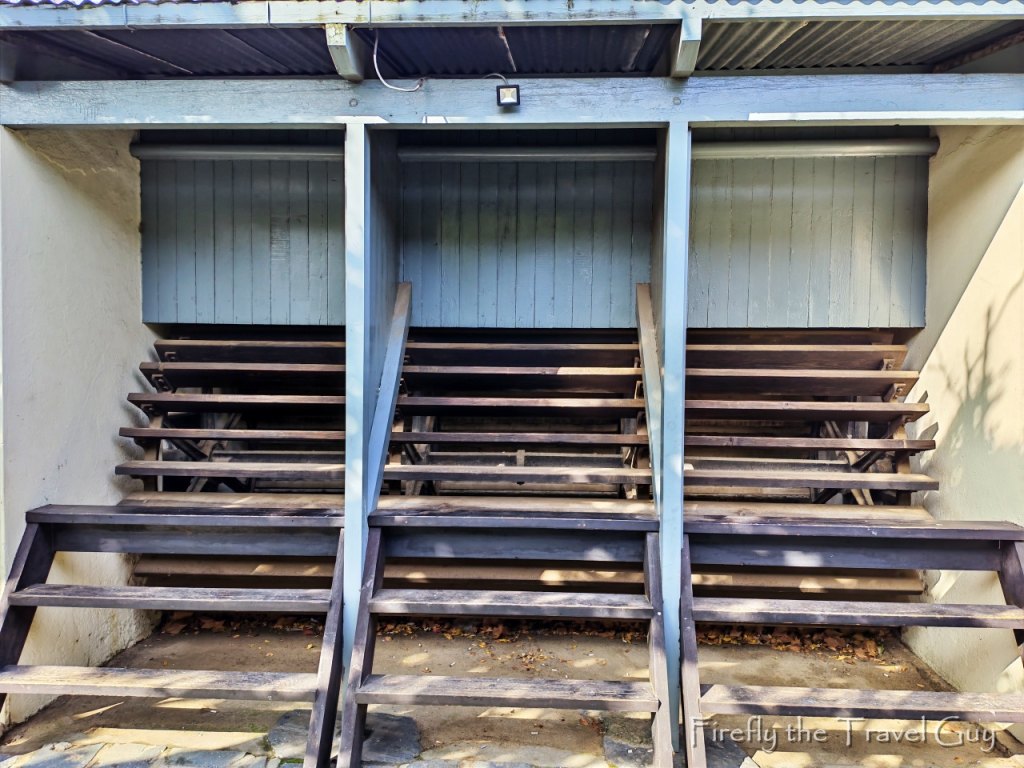
A Geocache brought me to the Breakwater Lodge on my last visit to Cape Town. The cache brought me to the prison’s treadmill, used to punish prisoners. The first treadmill was installed in the 1870s and could take two prisoners at a time. The larger one, which remains today was capable of holding six men at once and was built in the 1890s.
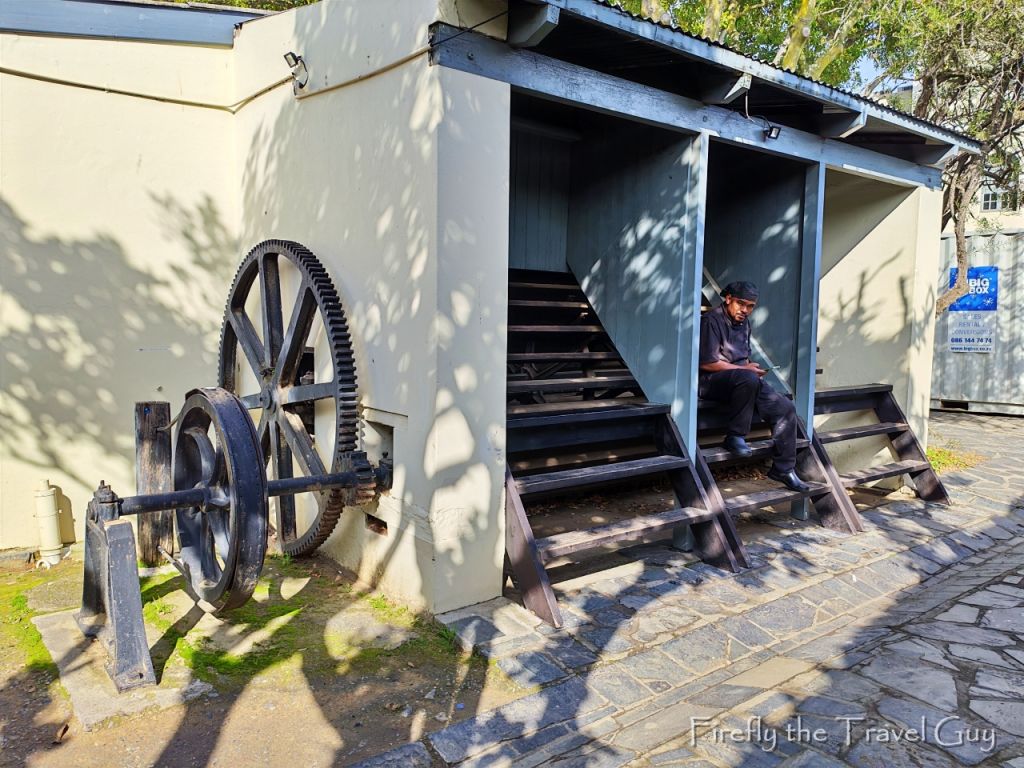
The treadmill is something like a revolving staircase made up of a series of rotating wooden planks. Prisoners would be tied to the bar at the top and had to keep a steady pace. If they slowed down, the rotating planks could lacerate or even smash their shins. A man could spend an entire day from 9.00am to 5.00pm climbing these endless steps with only five minutes rest every half hour.
Around the corner from the treadmill are the special cells that were built in the prison in 1891 to hold repeat offenders in solitary confinement. At the end of the line of cells are the two old death cells that used to hold prisoners sentenced to death.
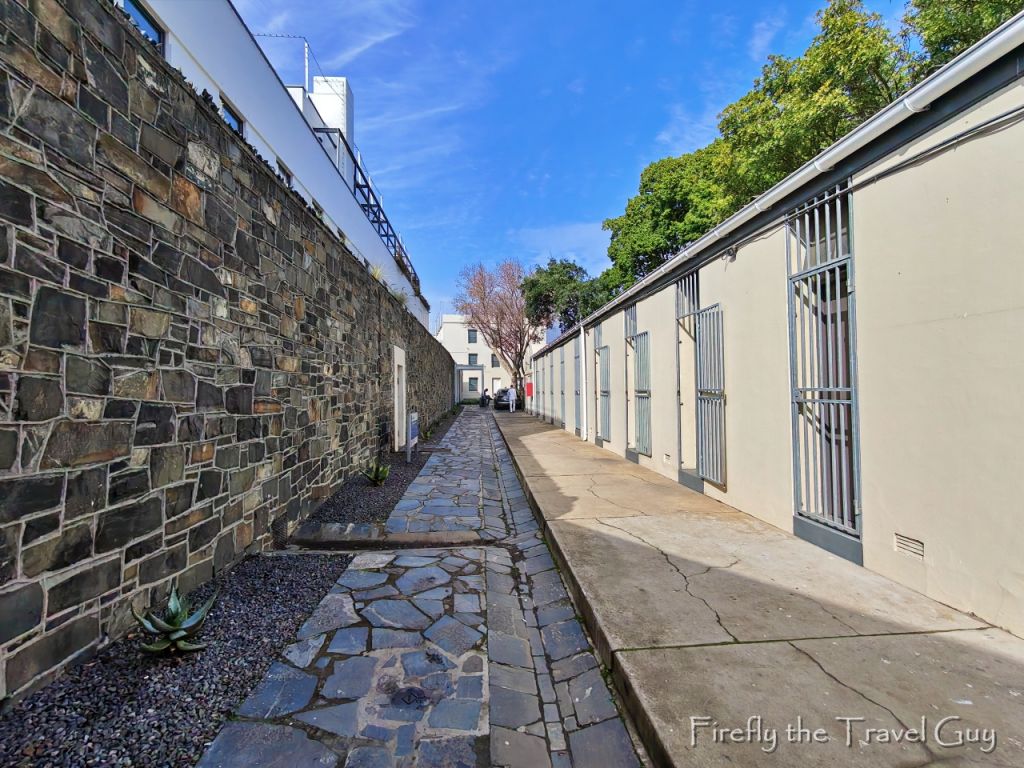
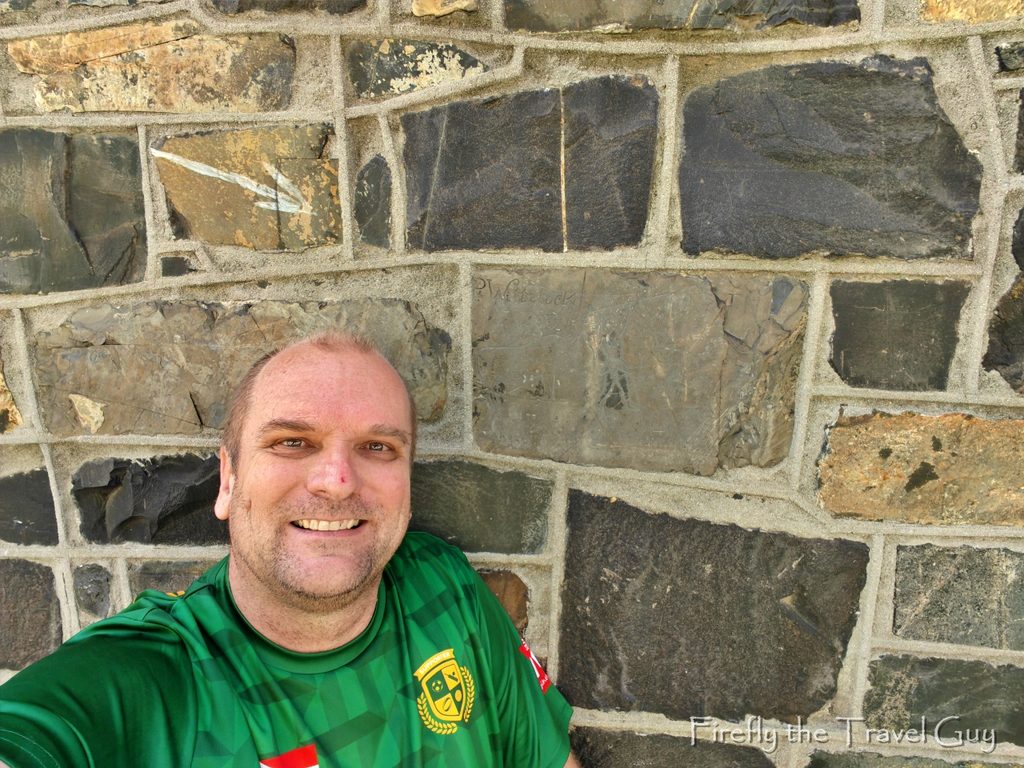
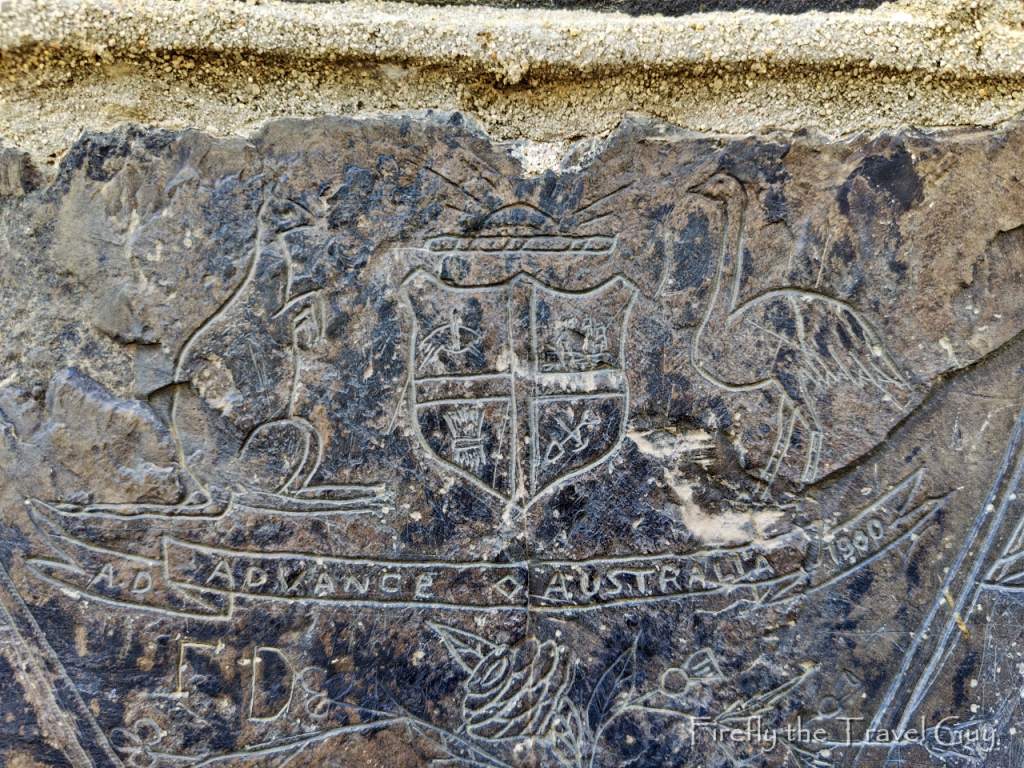
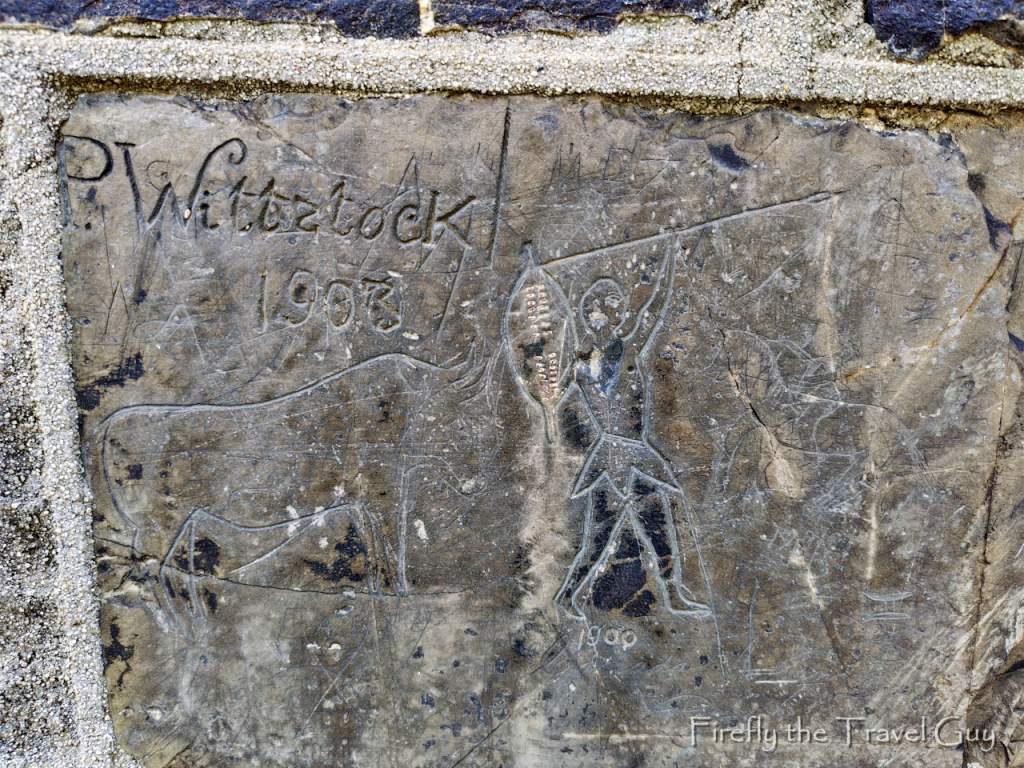
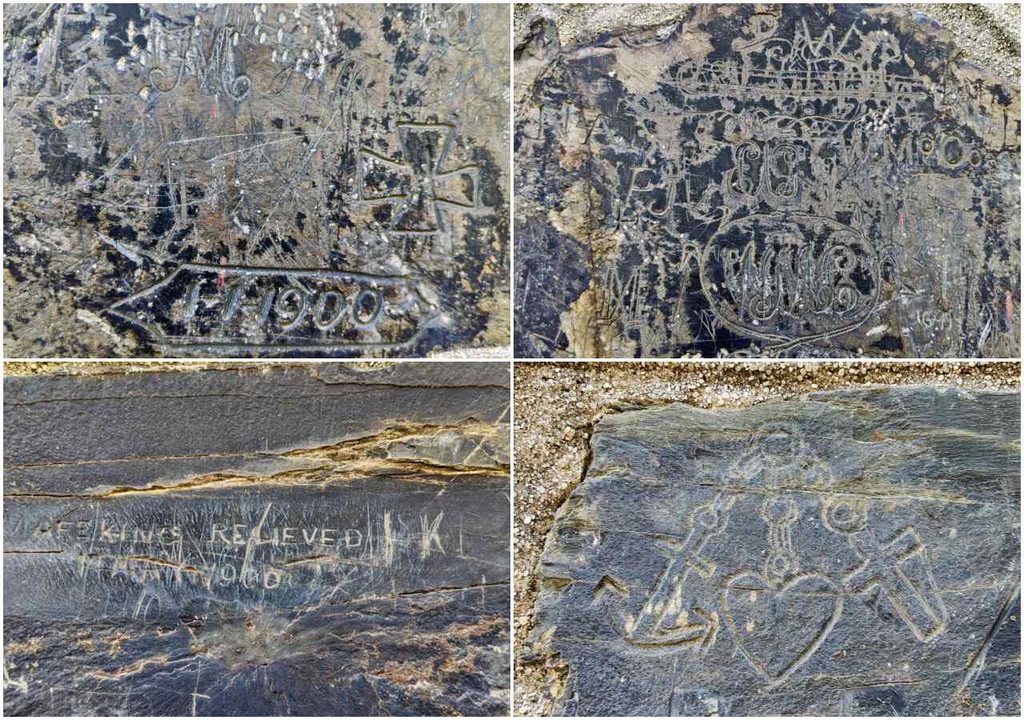
The wall in front of the cells is the prison’s original rock wall. Graffiti carved into the hard rock by inmates is still visible and marked with white painted arrows. Many scratchings are hard to decipher and are merely names and dates; others depict flags and imagined coats of arms.